
Program Catalog
- Popular Programs

- Management Programs

- Honorary Programs

- Post-Doctorate Programs

- Our Partner Universities

Eduminds Learning & Kennedy University Grand Convocation 2025 in Dubai: A Celebration of Global Education and Leadership
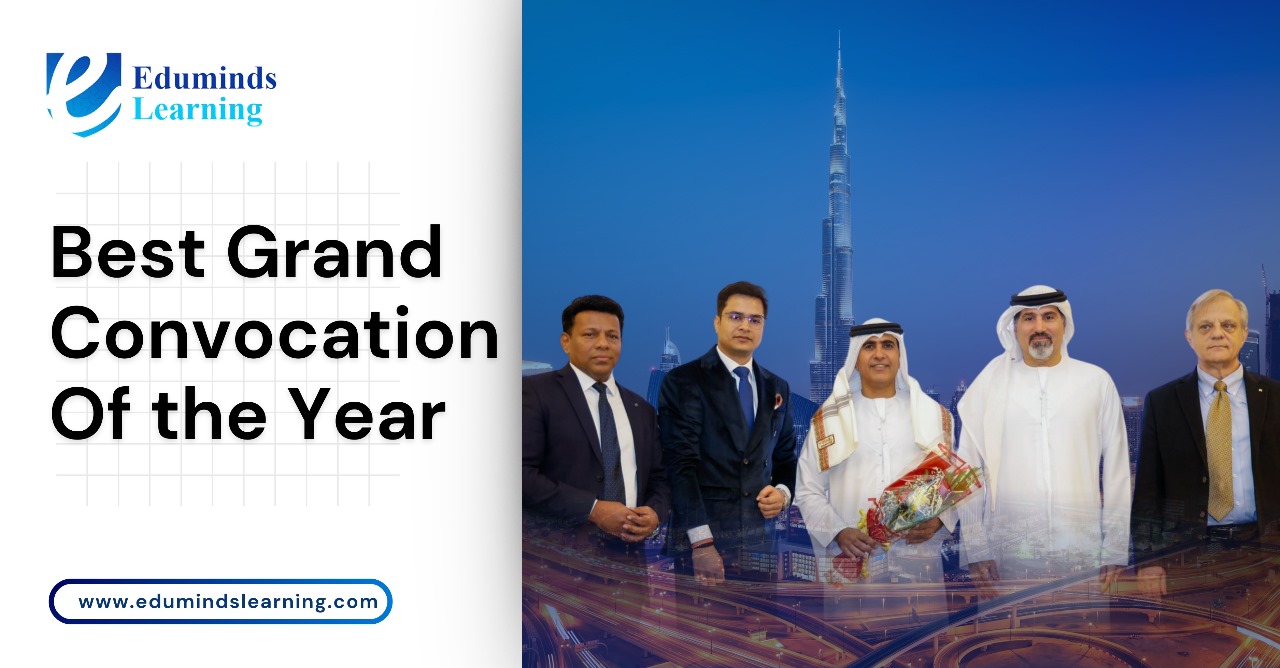
The scene at the Al Andalus Ballroom at the Al Habtoor Grand Hotel and Resort on the Jumeirah Beach was dimmed down as the processional music escalated and hundreds of academic gowns swiveled towards the stage. On 6 December 2025, one of the most scrutinized education and innovation centres in the world, already, Dubai became the centre of a convocation as symbolic as it was ceremonial.
\nIt was the Grand Convocation that Eduminds Learning hosted along with Kennedy University System: a historic Eduminds Learning convocation 2025 featuring graduates, families, faculty, industry leaders, and dignitaries, in various regions. It was a spectacular Dubai convocation, but it was also something greater a highly edited piece of message about what higher education might become in the world when online learning, professional doctorate, honorary and physical ritual come together.
\nAt the Al Andalus Ballroom, which is one of the flagship spaces at the Al Habtoor Grand Hotel, graduates of the Kennedy University Class of 2025 were seated under the glittering chandeliers. Some of the parents, around them, had seen their sons and daughters study till the late hours, executives had combined doctoral research with board meetings, first-generation learners whose parents felt that this day seemed nearly unreal. The flags and insignia of Eduminds Learning and Kennedy University framed a convocation stage on which soon would come representatives of one of the royal families, a leader in the aviation and civil aviation industry, a deputy managing director of Dubai Duty Free, a global media strategist, a maritime CEO, and an administrator-educator of the city.
\nThe event was, in many ways, a living case study in global higher education in the UAE: rooted in Dubai’s infrastructure and ambition, powered by cross-border digital delivery, and elevated by the presence of leaders whose careers span aviation, retail, media, shipping, and public administration.
\nThe Al Andalus Ballroom is designed for scale: high ceilings, modular staging, and the technological backbone required for live streaming, translation, and high-definition media coverage. On this December morning, it was transformed into a solemn yet celebratory convocation hall. A customised stage backdrop carried the inscription:
\n“Grand Convocation 2025 – Kennedy University – Dubai\n
Organised by Eduminds Learning\nAl Habtoor Grand Hotel & Resort – 6 December 2025
\n \n
\n
The visual language was calculated. The planners opted to use a simple, but respectable palette, dark navy, dull gold, and white, which stated that it was an academic event but one that was supposed to be heard by people around the world and not loud and pompous. This was not an act; it was a declaration.
\nIt was attended by a diverse audience representing the international convocation event of modern days in Dubai. Among the graduates were professionals of various backgrounds and conducting a range of professions: corporate managers of the Gulf and South Asian entrepreneurs, educators of Africa, executives of Europe and the Middle East in general. Some of them had already finished their coursework and research elements entirely over the internet, via platforms of Eduminds Learning and through their virtual classrooms at the Kennedy University, and had travelled to Dubai with the express purpose of crossing the stage and signifying the completion of the candidate to graduate transition.
\nThis moment was very personal, and it was the first time that one of the members of their family was an international academic event participant. That sense of closeness coupled with the magnificence of a five star location underscored the evocative nature of the day.
\nThe presence of Dubai was also felt. Beyond the ballroom, the skyline, ports, and networks of the airport of the city were undergoing their day-to-day exploits of trade, tourism and logistics. Internally, the same international streams of people and ideas were being re-packaged as education, research and recognition. The convocation implicitly posed a question core to the city itself in its own positioning: can a city that is centered on trade, tourism and finance also be a long term hub of Dubai education to international students? The structure of the event was such that the response is more and more yes.
\nEduminds Learning a fast-growing global education and EdTech platform that partners with universities to develop and deliver advanced programs- especially in areas like cybersecurity, data science, cloud computing, management and professional doctorates. Its external resources focus on three pillars, namely technology-enabled delivery, global accessibility, as well as close alignment to industry needs.
\nWithin a comparatively brief amount of time, Eduminds has grown to become a multi-country firm with more than 100 professionals working in it and a presence that spans over a dozen markets. Its model combines:
\nBased on its collaborations with institutions like Kennedy University or other international schools, Eduminds is a strategic delivery and engagement partner with learners. It assists in the design of programs, recruitment, academic facilitation, mentoring and in some cases, the coordinating physical activities like this convocation.
\nThe organisation also focuses specifically on the master degrees, professional doctorates and honorary status besides post-graduate certifications, usually aimed at the mid career and senior professionals. These students need to have a flexible timetable, be able to remain distant and the capacity to combine school work with challenging jobs.
\nIn addition to the mainstream learning management systems, Eduminds also focuses on 24/7 learning support, formal mentoring, and the possibility to study anywhere around the geographical location and remain linked to a global academic community.
\nIn recent coverage of the media and corporate profiles, Eduminds has been described as one of the fastest-growing global EdTech brands in the higher education segment, specifically doctorate programs and cross-border partnerships. It has also brought out international awards it has received due to its contribution towards widening access to high level education. The storyline, in both instances, is the same: Eduminds is a digital-first world that aligns itself between universities and industry as well as learners.
\nIn Dubai, the Eduminds Learning grand convocation 2025 was an evolution of its strategic change. Rather than appearing as a background delivery partner, the company went on to stage as a convening force, that is, to assemble the learners, faculty, dignitaries and institutional partners into one highly visible event.
\nKennedy University, operating within a wider Kennedy University System, has built a distinctive profile as an institution using online learning to reach a global student base. Its ecosystem includes Kennedy University of Baptist, a faith-oriented institution offering religiously framed degrees and theological programs, as well as international-facing entities delivering professional pathways and doctoral structures.
\nKennedy University leverages digital platforms to offer programs to students spread across multiple continents. Many participants in the Dubai convocation had completed substantive portions of their coursework and research remotely.
\nA central part of Kennedy University’s portfolio is the professional doctorate—particularly in business administration and related areas. These programs are framed as practice-focused, requiring candidates to integrate research with organisational and sectoral problem-solving.
\nAlongside its formal degree offerings, the Kennedy University System also supports honorary pathways such as honorary doctorates and peace-oriented recognitions delivered through partners like Eduminds. These are clearly framed as symbolic acknowledgements of real-world impact rather than as equivalents to earned academic doctorates.
\nAt the Dubai ceremony, these threads came together. Kennedy University’s commitment to globally distributed learners and hybrid educational models was made visible in the procession of graduates crossing the stage; its honorary and recognition programs were reflected in the presence of distinguished guests known for leadership in public service, business, and community engagement.
\nFor Kennedy University, the Kennedy University Dubai convocation was both a graduation ceremony and a strategic demonstration: evidence that an online, international-facing institution can still host a physical convocation of considerable stature, alongside a partner like Eduminds Learning, in one of the world’s most prominent cities.
\nThe program was designed in a well-timed order by giving the classical structure of a graduation ceremony with the features of international cohorts and mid-career professionals.
\nThe Procession and Introductions Ceremony.
\nIt started off with an academic procession. The academic leadership members, representatives of Kennedy University, senior people of Eduminds Learning were allowed to enter first, then chief guests and dignitaries. The graduating group then got up and entered the hall in a processional manner.
\nThe ritual started with an introductory ceremony that recognized three levels of context:
\nThe participants in the system as institutions, i.e. Kennedy University and Eduminds Learning were introduced as cooperative stakeholders in a global education ecosystem.
\nGraduates were invited to the stage in groups as the ceremony continued. The groups were each representing a program cluster, which was, master degrees, doctoral pathways, and related specializations. Diplomas and awards were given in line with the academic practices and the names of the candidates were announced and their performance recognized.
\nThe best experiences to most were intimate and individual- the handshake, the word or two with a chancellor or high university official, the feeling as a parent when a first generation student was officially acknowledged on an international stage.
\nPart of the program was also segmented with recognition of recipients whose research or professional activities had proved specific impact - within their organisations, communities, or fields. Instead of making them a separate entity and calling it an award, the convocation story incorporated them into the larger context of leadership and responsibility.
\nThis was an extensively documented ceremony. The event design incorporated professional photography, video capture, and social content, which were based on the realities of contemporary academic and corporate communication. Highlights were also circulated on official channels of Eduminds Learning and the highlights included:
\nThe fact that the royalty and diplomats shared the same stage with doctoral graduates.
\nThe Al Andalus Ballroom architectural and aesthetic features.
\nUnprofessional photos of graduates with families- photos that are bound to be stored in personal and institutional archives in the coming years.
\nThis narrative control is relevant in a time and age when the concept of digital identity and visibility is gaining more and more significance. In the case of graduates, it gives their success a greater value. In the case of Eduminds and Kennedy University, it strengthens brand position in the global higher education and EdTech domain.
\n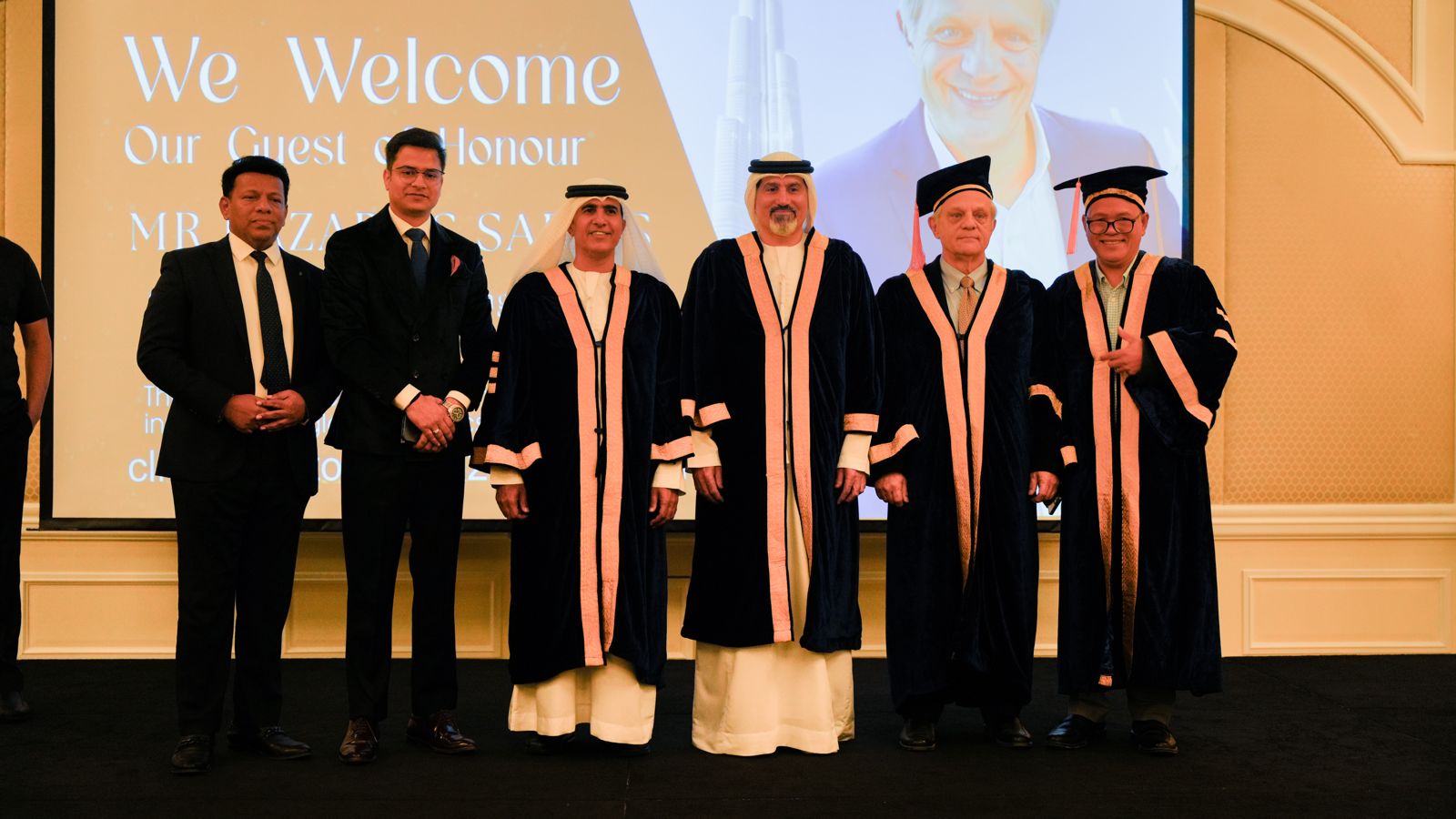 \n
\nThe chief guests invited were not hired just to ensure ceremony prestige. They are a divisive array of aspects of the modern world leadership: public, private, media, maritime, and civic, therefore it is no coincidence that they are present at a convocation concerning more than merely protocol.
\nHH Sheikh Salem Bin Sultan Al Qassimi, Chairman of the Ras Al Khaimah Department of Civil Aviation, has been a central figure in advancing the emirate’s aviation infrastructure, including airport development, tourism connectivity, and emerging aerospace initiatives. His work reflects a longstanding commitment to national progress, international linkages, and sectoral modernization.
\nAt a convocation, his presence carries multidimensional significance:
\nHis Excellency Salah Tahlak is the Deputy managing director of Dubai Duty Free after a long service of leadership in one of the most recognised organisations globally in the travel retail sector. He also has a reputation of being involved in main sporting activities such as tennis where he has worked in top leadership positions of major tournaments.
\nAt the convocation, he represented:
\nDr Mohammed Khan Founder, President and CEO Khans Media City is a media and communications company that has operations in the Gulf region and beyond. He has been broadly profiled as a media strategist and an entrepreneur whose career of overbranding and event communication and storytelling of corporations.
\nHis presence had a number of messages in the context of the convocation:
\nCentral Ship Management Ltd is a Dubai based maritime company where Mr Lazaros Sarris is the Founder and CEO and the company is involved in operations that are related to the major shipping routes and ports. He has an extensive experience in the maritime industry and possesses several decades of experience in the field along with corporate leadership skills.
\nIn a group of cohorts which covered business and management graduates, his presence came to the fore:
\nIn the case example of a Filipino City Administrator, Dr Enrique Guevarra, he has a parallel identity as an educator, academic researcher, and community leader. He has personally undertaken efforts on the matters of data privacy, cybersecurity awareness, and digital transformation in local governance.
\nHis involvement introduced the public-sector view of governance into the discussion:
\nCombined, the chief guests have technically created a multidisciplinary advisory board on paper. To graduates, it was made clear that the world they are moving into is a global one and to lead efficiently, they need to know how to fluently move through sectors, rather than in one of the areas.
\nAt the heart of the convocation was the voice of its principal architect:
\nMr. Devesh Singh Rathore, Founder & CEO of Eduminds Learning. Public profiles and media features describe him as the driving force behind Eduminds’ rapid evolution from a small education venture into an international EdTech platform focused on advanced and professional education.
\nThe Dubai convocation gave him a rare dual role: as corporate leader and as a kind of “academic host” responsible for articulating what this moment meant for graduates, partners, and the broader global education landscape.
\n \n
\nIn his opening narrative, Mr. Rathore reflected on the beginnings of Eduminds Learning. It started not as a large corporate project, but as a response to a simple, practical observation: professionals across emerging and established markets wanted to pursue meaningful higher education particularly at the master’s and doctoral levels—without leaving their jobs or relocating their families.
\nOver time, that observation was translated into a structured platform:
\nMr. Rathore narrated this experience in Dubai as a group success instead of an individual victory. He has consistently placed Eduminds Learning as an facilitator to both the learner and the institution instead of the main character. Nevertheless, he had his personal consideration: in his opinion, international access to the quality education is one of the most effective levers in the social and economic mobility in the XXI century.
\nDuring one of the defining moments of the ceremony, there was also a transition of more personal and emotional keynote speech by Mr. Rathore because of the formal introductions. His words, here reprinted in a long quotation form, were emotional as well as strategically aimed at his message:
\n“When we started Eduminds Learning, we lacked global presence, media coverage and ballroom as such. A question we had and a conviction too.\n
It was an easy question: Can a working person, anywhere on the globe, have a serious academic degree, without leaving his/her employment or moving his/her family?\n
\n
The belief was that: in the event that we can do that with integrity and rigour, we can secretly transform lives.”\n
\n
He said good-bye, and after the room had quieted down, turned to the graduates.
\n“I can look over this hall today and find so many answers to that question. I see those who had gotten to classes following long shifts, those who had written research chapters during times when their children were asleep, those who had argued with their employers to have time to participate in live sessions.\n
A good number of you are the first generation learners internationally. This is the first person in your family to put on this gown in Dubai, in front of the ruling elite, diplomats, CEOs, and the academic administrators. It is not only a time when you are getting a degree. It is of your families altering the manner in which they speculate on the future.”\n
\n
Directly to families and supporters, he then said:
\n“You are unknown to the parents, partners, and children here and to those who observe you in other countries, you are a part of this convocation; You put up with studying late at night, classes on weekends, and the times when the person you love was physically there but still in that assignment or research problem.\n
Your patience this evening and your faith become a reality: their triumph, their boldness, and their strength on this stage.”\n
\n
Addressing the dignitaries, he went on:
\n“Your Highness, Your Excellencies, honourable leaders, thank you for your Presence.\n
\n
When a distinguished figure in a royal family in charge of civil aviation, a global media strategist in the Dubai Duty Free, a maritime CEO, and a city administrator and educator all decide to visit you, you send a loud signal to our graduates:\n
Their learning is important outside the classrooms and the screens. That the choices they will make as leaders will reach airports, ports, data networks, city halls and the histories we narrate as societies.”\n
\n
Then he changed to values, discipline, perseverance and ethics:
\n“ You have been exposed to leadership models, financial models, information systems, and research methods. Those tools matter.\n
But what bore you up to this, what brought you up, were three other, more silent virtues, discipline, perseverance, and ethics.\n
Discipline implied attending classes even when no one was taking roll calls. Persistence involved persisting with the difficult research question when the simpler choice would have been to address the research question. Ethics were about making choices, most of them not spoken, that you will not copy, not distort data, not cut corners that will result in your own downfall.\n
When you walk out of this hall, you will be able to impress certain people with what you have learned. It will be your morals that make people trust you forever.”\n
\n
Dubai itself entered into the structure of the speech:
\n“We did not just pick Dubai. This city is a breathing demonstration of what could be done when the vision is combined with disciplined implementation.
\nWithin just one generation, Dubai has emerged as a melting point of continents - a place where aircraft, vessels, information, funds, and visions are coming every minute. This is a city that people visit to challenge their ambitions.
\nBy holding your convocation here, in this international convocation ceremony in Dubai, we are saying to you: your education is not local. It is global in its implications and expectations.”
\nHe then acknowledged University for academic partnership:
\n“To our partners, thank you for trusting Eduminds Learning with your students, your programs, and your reputation.
\nTogether we are attempting something difficult: to make flexible, globally accessible education that still respects the seriousness of academic work. We are committed to ensuring that what we build is not a shortcut, but a genuine pathway for people who once believed advanced education was out of reach.”
\nFinally, he addressed the graduates’ future role:
\n“Some of you will become CEOs, deans, senior civil servants, founders, or board members. Some of you will continue to be the quiet pillars inside organisations the people who may not be on magazine covers but without whom nothing works.
\nWherever you go, I ask you to remember one simple idea: Leadership is the responsibility to protect trust.
\nProtect the trust of your teams by being honest about what you know and what you do not yet know. Protect the trust of your clients and citizens by ensuring the numbers you present are truthful. Protect the trust of your families by staying grounded, even as new letters appear after your name.
\nEducation, especially at this level, is not just a private asset. It is a public responsibility. The world is not asking you simply to succeed; it is asking you to succeed responsibly.”
\nHe ended by giving a commitment going forward relating to Eduminds Learning:
\nAs an organisation, we will keep expanding globally, but we will do it in a very prudent manner. We shall venture into new markets, but we never shall compromise on quality and transparency. We shall develop new programs, however, we shall put them to the test of a plain question: Does it truly contribute to learning growing in the student, or does it contribute to learning growing in us?
\nYou, our college boys and girls, are our envoys. It will be how you lead, the way you make the decisions, and the way you treat people that will be the true test of the Eduminds Learning and Kennedy University.
\nCongratulations, Class of 2025. May you be the leader in such a manner that the degrees you get today will hold more meaning each day.
\nMr. Rathore spoke in a register and with content which did what the perfect presidential-style speech ought to do: to put personal struggle with institutional mission and make success an end to be achieved rather than a right to be received and to make the convocation not the culmination of a quest, but the moral initiation of a new one.
\nIn the case of Eduminds Learning, the speech also helped explain its intended identity, not just as an online course provider, but as an international platform of learning, which is working to be restrained, transparent (as well as having a sense of purpose) and responsible in the future.
\nThe graduates of the hall were the embodied reality of the higher education of the modern world. Most of them had never stepped in a conventional campus throughout their programs; their classrooms had been internet windows and digital sites. But the convocation was so formal that there was no mistaking their labour.
\nThe cohort included:
\n1.Business, management, and other related doctoral and professional doctorate students whose research was frequently interested in the practical problems of organisations.
\n2.Master graduates who paired their education with a challenging position in the corporate, government or non-profit sector.
\n3.Practitioners, The teachers, institutional leaders, or policy makers who were enhancing their practice through their programs.
\nThe award also noted the similar path of honorary degree relating with Kennedy University and Eduminds Learning- especially honorary doctorates and peace- or education-specific recognitions celebrating lifetime contributions and influence. Notably, the two organisations have publicly made an effort to stress that these awards are symbolic awards, as opposed to academic degrees which carry credit. That intelligibility is important to credibility.
\nThe influence of this convocation on the world cannot be deemed in terms of the number of degrees awarded. It has a meaning in the networks and stories that it generated:
\nIt is also going to be a day that will form family narratives over the years to the first-generation graduates. It can become the point at which professionals in the mid-career stage change their identity, no longer a manager, but a leader, not a practitioner, but a scholar-practitioner.
\nThe convocation reinforced what is already increasingly apparent, which is that Dubai is not merely a center of aviation, tourism, and finance; it is gradually gaining strength as a Dubai education hub by international students.
\nSeveral factors make Dubai a particularly effective setting for ceremonies like this:
\nPositioned between Asia, Africa, and Europe, Dubai allows international cohorts to gather in a single location with manageable travel times.
\nThe city has a long track record of hosting international conferences, summits, and exhibitions, which translates into a mature ecosystem for managing cross-cultural, high-profile events.
\nFor many learners and families, walking across a stage in Dubai carries a symbolic significance that extends beyond the degree itself. It signals participation in a global narrative of ambition and transformation.
\nThe UAE’s broader national strategies increasingly highlight knowledge, innovation, and human capital development. Free zones dedicated to education, the presence of international branch campuses, and the growth of training and executive education providers all illustrate this direction.
\nThe grand convocation in Dubai for the Kennedy University Class of 2025 fits neatly within that context. It demonstrates that the city is not only hosting branch campuses but also serving as a neutral stage for transnational education partnerships—where institutions from different jurisdictions can celebrate their graduates together.
\nAs Eduminds Learning continues its global expansion, its leadership has repeatedly emphasised two parallel commitments: growth and responsibility.
\nOn the growth side, the organisation intends to:
\nOn the responsibility side, Eduminds recognises the scrutiny that non-traditional, cross-border, and online-focused institutions attract. Its public communications increasingly stress:
\nThe Dubai convocation will likely serve as a reference point for future initiatives. It showed that Eduminds can convene a high-stature event with credible partners and dignitaries while maintaining a tone that is aspirational, but not exaggerated.
\nFor Kennedy University and its wider system, the convocation highlighted multiple strategic trajectories:
\nAs with any international-facing institution, Kennedy University’s long-term reputation will depend on how consistently it aligns messaging, quality assurance, and regulatory realities. Ceremonies such as the Kennedy University Dubai convocation provide visibility; what happens in classrooms, research projects, and alumni careers will provide substance.
\n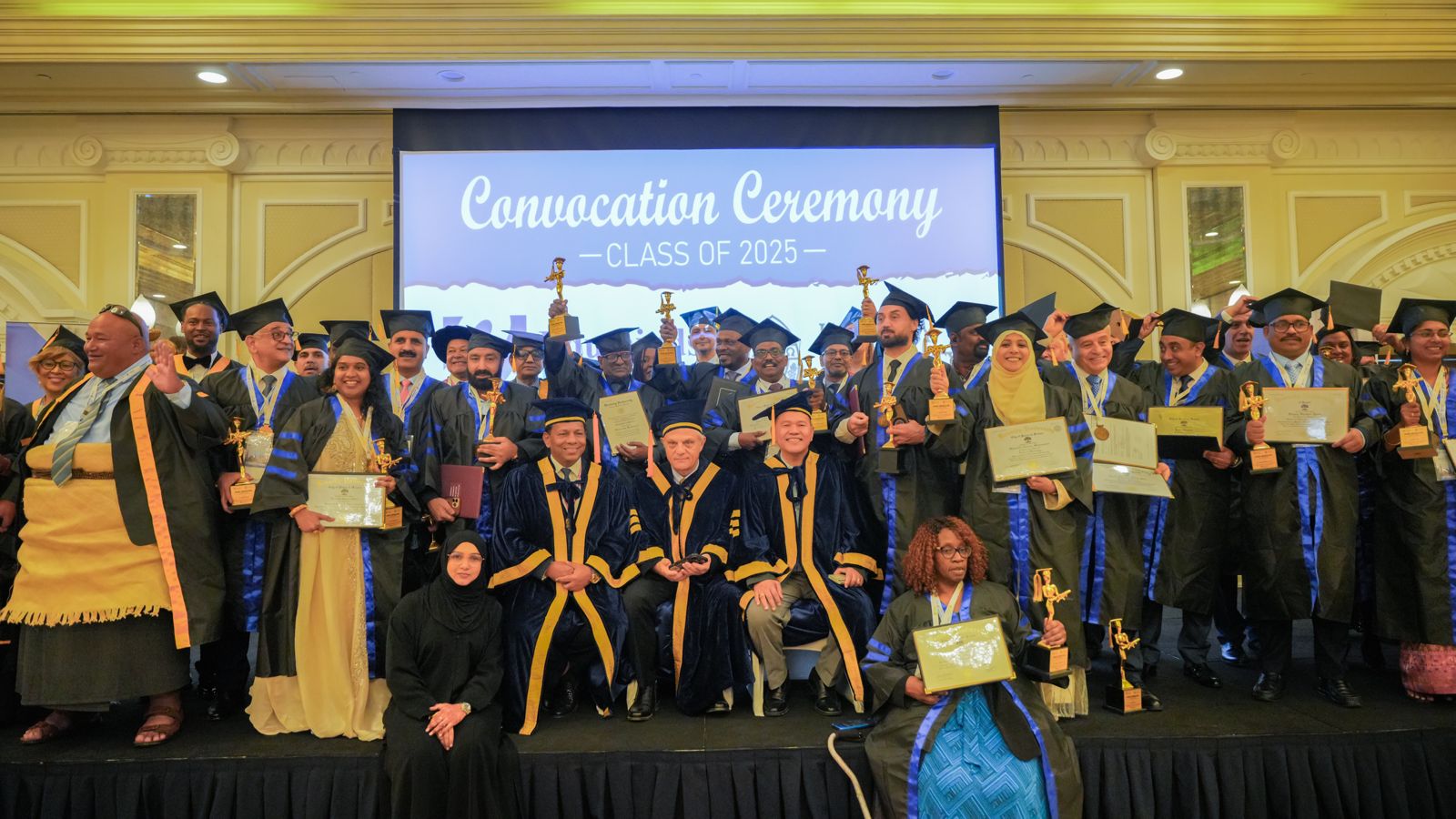 \n
\nWhen the final group photograph was taken and the graduates slowly began to leave the Al Andalus Ballroom, the Grand Convocation may have felt like the end of an intense chapter. Yet in the longer view, it is likely to be remembered as a beginning.
\nFor Eduminds Learning, the convocation demonstrated its evolution from a back-end education delivery company to a visible global convener—an organisation willing to be judged not only by its marketing language but by the company it keeps: royal family members, senior diplomats, CEOs, city administrators, and, above all, its graduates.
\nIn the case of Kennedy University, the event provided a physical expression of an academic model, which is mostly digital. It demonstrated that even with an online learning-based system and cross-border recognition, it is possible to award its students through a good and strict in-person convocation in one of the main global cities of the world.
\nIn the case of Dubai, the event solidified its path as a hub of international higher education in the UAE--a destination where knowledge is not merely imported or exported, but where it is performed, celebrated and incorporated into larger national and international development and globalization processes.
\nAnd to the graduates of the Kennedy University Class of 2025, the day would be marked when those long nights of study, intricate research and hard personal decisions became a reality: a walk across a stage, some embrace with family, a handshake with those whose face had been broadcast on TV.
\nIt is not until the photographs are stored away and the gowns are stashed that the actual ordeal starts. When the words spoken in Dubai about integrity, responsibility and the public aspect of the educational process are put into action in the decision-making of boardrooms, classrooms, in ministries and communities around the globe, then the legacy of the Eduminds Learning convocation 2025 will reach way out into date-space and geography.
\nIt will continue to exist in the kind of leaders they will be: silent, competent, fully aware that their degrees do not represent a personal accomplishment, but a promise to a world in which they are expected to apply knowledge not only to benefit themselves, but to benefit others.
\nLoading comments…
Our experts will contact you within 24 hours




Subscribe Now — Don't Miss Our Future Updates!
![[object Object]](/_next/static/media/white-logo.e43d74a5.svg)
Your Dreams - Our Mission
![[object Object]](/_next/static/media/star.e839977c.svg)
![[object Object]](/_next/static/media/clutchco.d9d205d7.svg)
![[object Object]](/_next/static/media/google.e753ca54.svg)
![[object Object]](/_next/static/media/facebook.8a231495.svg)
![[object Object]](/_next/static/media/trustpilot.77877b99.svg)


Eduminds Learning
LLC
30N Gould ST STE R, Sheridan
WY 82801, United States
+1 (307) 295-0570

Eduminds Learning Private Limited
D-26, Block D, Sector 59, Noida Uttar Pradesh - 201301 India.
+91 6387739671, +91 9289919899
Eduminds Learning Limited
Unit 2A, 17F, Glenealy Tower No 1, Glenealy Central Hong Kong.
+44 2045922871

Eduminds Learning
LLP
128 City Road, London, EC1V 2NX,
United Kingdom
+44 7520 694 197
Copyright © 2026 Eduminds Learning. All Rights Reserved.

