Program Catalog
- Popular Programs

- Management Programs

- Honorary Programs

- Post-Doctorate Programs

- Our Partner Universities

PhD Full Form: Meaning, History, Eligibility, and Career Scope
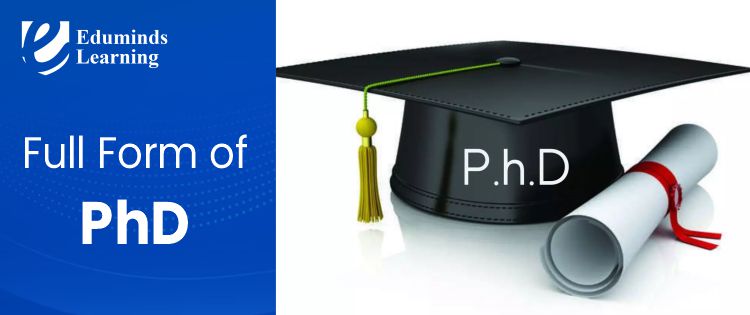
PhD stands for \"Doctor of Philosophy.\" It's the highest academic degree a person can earn. People typically pursue a PhD when they want to explore deeper into a subject and become an expert in it. It often leads to careers in teaching, research, or advanced jobs in different fields.
Many students consider pursuing a PhD after completing their master's degree. It requires time, effort, and a strong interest in the subject. However, it can open doors to jobs in colleges, research centers, or companies that require in-depth knowledge.
Here's what this guide will help you learn:Whether you're a student, a parent, or just curious, this article will give you a clear idea of what a PhD is and why it matters.
Let's keep it simple and straight. No confusing words. Just helpful facts and easy steps to understand the whole picture.
PhD stands for Doctor of Philosophy.
This doesn't mean you study philosophy unless that's your chosen subject. The word \"philosophy\" originates from the Greek word philosophia, meaning \"love of wisdom.\" A PhD shows that you've studied a subject deeply and added something new to it through your research.
A PhD is not the same as a medical doctor degree. It's a research degree. People earn it in various fields, such as science, history, mathematics, education, or business.
Here's what makes a PhD different:PhD degrees are awarded by universities worldwide. You typically need a master's degree before starting, but in some countries, you can begin after completing a bachelor's degree.
Many people with PhDs work as professors, scientists, researchers, or writers. Some also work in companies that require in-depth knowledge in areas such as technology, healthcare, or economics.
In short, a PhD is about learning more, posing significant questions, and finding answers through rigorous study and research.
The PhD started many years ago in Europe. It began as a degree awarded by universities to individuals who demonstrated a profound understanding of a subject.
The first PhDs were awarded in Germany in the early 1800s. Back then, universities encouraged students to think critically and conduct original research, rather than merely memorizing facts.
The idea spread to other places, such as the United Kingdom and the United States. Over time, many countries created their PhD systems based on the German model.
Here are some key points:Today, a PhD is offered in almost every subject. From science and engineering to education and social sciences, people choose PhDs to gain in-depth knowledge and build careers in research or teaching.
The goal hasn't changed much. A PhD still signifies that a person has made a significant contribution to a subject by studying it in depth.
lthough the process has evolved, its purpose remains the same: to learn, think, and share new ideas.
A PhD is a research-based course. It helps you become an expert in a subject by studying it for many years.
You choose a topic, do research, and write a long paper called a thesis. This paper must show that your work is new and adds value to the subject.
Here’s what you can expect in a PhD course:You can do a PhD full-time or part-time, depending on your schedule. Some people even work and study at the same time.
The main goal of a PhD course is to help you find new ideas, solve problems, and share knowledge with others
The PhD syllabus is not the same for everyone. It changes based on the subject you choose and the university you join. Still, most PhD programs follow a few common steps. Here's a simple look at what you'll study and do:
Subjects like science, engineering, social science, or literature may include extra work like lab tasks or field visits.
The PhD curriculum builds your skills in: Every step helps you become better at learning and sharing what you know. To apply for a PhD, you must meet a few basic rules. These can change based on the country or university. But the main steps stay mostly the same. Here's what you need: Also, many colleges now allow students with a 4-year bachelor's degree to apply for a PhD, depending on their scores and the subject. If you're aiming to study abroad, you may need English tests like IELTS or TOEFL. Always check the exact rules of the college or country you are applying to. To apply for a PhD, you must meet a few basic rules. These can change based on the country or university. But the main steps stay mostly the same. Here's what you need: Also, many colleges now allow students with a 4-year bachelor's degree to apply for a PhD, depending on their scores and the subject. If you're aiming to study abroad, you may need English tests like IELTS or TOEFL. Always check the exact rules of the college or country you are applying to. Getting into a PhD program takes a few steps. Each college may have different rules, but most follow a similar pattern. Here’s how it usually works: This process can take a few months, so plan early. Always follow the deadlines and rules of the college. PhD students can choose from many subjects, based on what they want to study deeply. Picking the right area matters because it shapes your full research journey. Here are some common PhD specializations: Each subject may have smaller topics you can pick for your research. Choose a subject that matches your skills and interests. It should also be useful for your future career goals. Always check if your chosen college offers that subject. Doing a PhD takes time and effort, but it can give you many good things in return. Here are some clear benefits: Doing a PhD is not for everyone. It needs time, planning, and a deep interest in learning. But for those who enjoy studying and researching, it can be a strong step for career and personal growth. A PhD gives you more than a degree. It provides you with career choices that go beyond teaching or research. Here's where you can go after finishing your PhD: A PhD shows you can think deeply, manage large projects, and finish long-term goals. These skills work well in many job paths, not just inside classrooms or labs. A PhD can help you earn more compared to a bachelor’s or master’s degree. Let’s compare what you might earn in India and the U.S. 🇮🇳 India 🇺🇸 United States Higher Earning Potential: Doctoral degree holders often earn 38% more than those with master’s degrees over a career. Better Jobs: Roles in research, academia, and high-tech sectors pay more. Scholarships and Stipends: In India, many PhD candidates receive monthly stipends (₹25K–₹40K+) during study. A PhD can bring better pay, but your role, location, subject, and experience shape your earnings. Going for a PhD? Scholarships can help pay for your studies and living costs. Doing a PhD takes years. It needs focus, time, and energy. While it can be rewarding, students also face real problems. Here are some common challenges: PhD life is not easy. But with planning and support, students can manage these problems better. A PhD can be rewarding, but also hard. The road is long, and many students feel stuck at times. These simple tips can help you stay on track and finish strong. Doing a PhD takes time, effort, and a lot of patience. It's not just about getting a title. It's about learning deeply, solving real problems, and building skills for life. You don't need to be perfect to start a PhD. You need focus, support, and the drive to keep going even when things get hard. There are many paths after a PhD—teaching, research, working in companies, or starting something of your own. You can choose what fits you best. If you're thinking about it, ask questions. Talk to current students or professors. Look at what each program offers. Know what you're signing up for. And if you're already on the journey, stay steady. Celebrate small wins. Take care of your mind and body. You're building something big, step by step. A PhD isn't easy. But it can be worth it—if it matches your goals and you're ready for the ride. 1. What is a PhD? A PhD (Doctor of Philosophy) is the highest level of academic degree. You earn it by doing deep research and writing a thesis on a subject. 2. How long does it take to complete a PhD? Most PhD programs take 3 to 6 years. The time depends on your topic, research speed, and how the university works. 3. What is the difference between a PhD and an Honorary Doctorate? A PhD is earned through years of study and research. An honorary doctorate is given to someone as a mark of respect, usually for their work or impact, without completing a PhD program. 4. Can I work while doing a PhD? Yes, many students work part-time or take research or teaching jobs. But balancing both can be hard, so good planning is key. 5. Do I get paid during a PhD? Some PhD students get a stipend or scholarship. Others may work as teaching or research assistants to earn money. 6. Is a PhD only for people who want to teach? No. While many teach, PhDs also work in research, companies, government, and other fields where deep knowledge is needed. 7. What are the biggest challenges in a PhD? Common struggles include stress, long working hours, unclear goals, and staying motivated over time. 8. How do I know if a PhD is right for me? Ask yourself if you enjoy learning, solving problems, and working alone for long periods. Talk to people who have done it to get a clear view.Eligibility Criteria for a PhD
PhD Admission Process
PhD Specializations
Benefits of Pursuing a PhD
Career Scope After PhD
PhD Salary Expectations
Why a PhD Can Boost Pay
Tips to Maximize Salary
Scholarships and Funding Options
Here are some top options:
Indian PhD Fellowships
International Scholarships
How to Find More Funding?
Tips to Boost Your ChanceChallenges Faced by PhD Students
What Can Help?Tips for Success in a PhD Journey
Conclusion
Frequently Asked Questions
Loading comments…
Our experts will contact you within 24 hours









Subscribe Now — Don't Miss Our Future Updates!
![[object Object]](/_next/static/media/white-logo.e43d74a5.svg)
Your Dreams - Our Mission
![[object Object]](/_next/static/media/star.e839977c.svg)
![[object Object]](/_next/static/media/clutchco.d9d205d7.svg)
![[object Object]](/_next/static/media/google.e753ca54.svg)
![[object Object]](/_next/static/media/facebook.8a231495.svg)
![[object Object]](/_next/static/media/trustpilot.77877b99.svg)

Eduminds Learning
LLC
30N Gould ST STE R, Sheridan
WY 82801, United States
+1 (307) 295-0570
Eduminds Learning Private Limited
D-26, Block D, Sector 59, Noida Uttar Pradesh - 201301 India.
+91 6387739671, +91 9289919899

Eduminds Learning Limited
Unit 2A, 17F, Glenealy Tower No 1, Glenealy Central Hong Kong.
+44 2045922871
Eduminds Learning
LLP
128 City Road, London, EC1V 2NX,
United Kingdom
+44 7520 694 197
Copyright © 2026 Eduminds Learning. All Rights Reserved.

