
Program Catalog
- Popular Programs

- Management Programs

- Honorary Programs

- Post-Doctorate Programs

- Our Partner Universities

Honorary Doctorate in UAE: Eligibility & Recognition
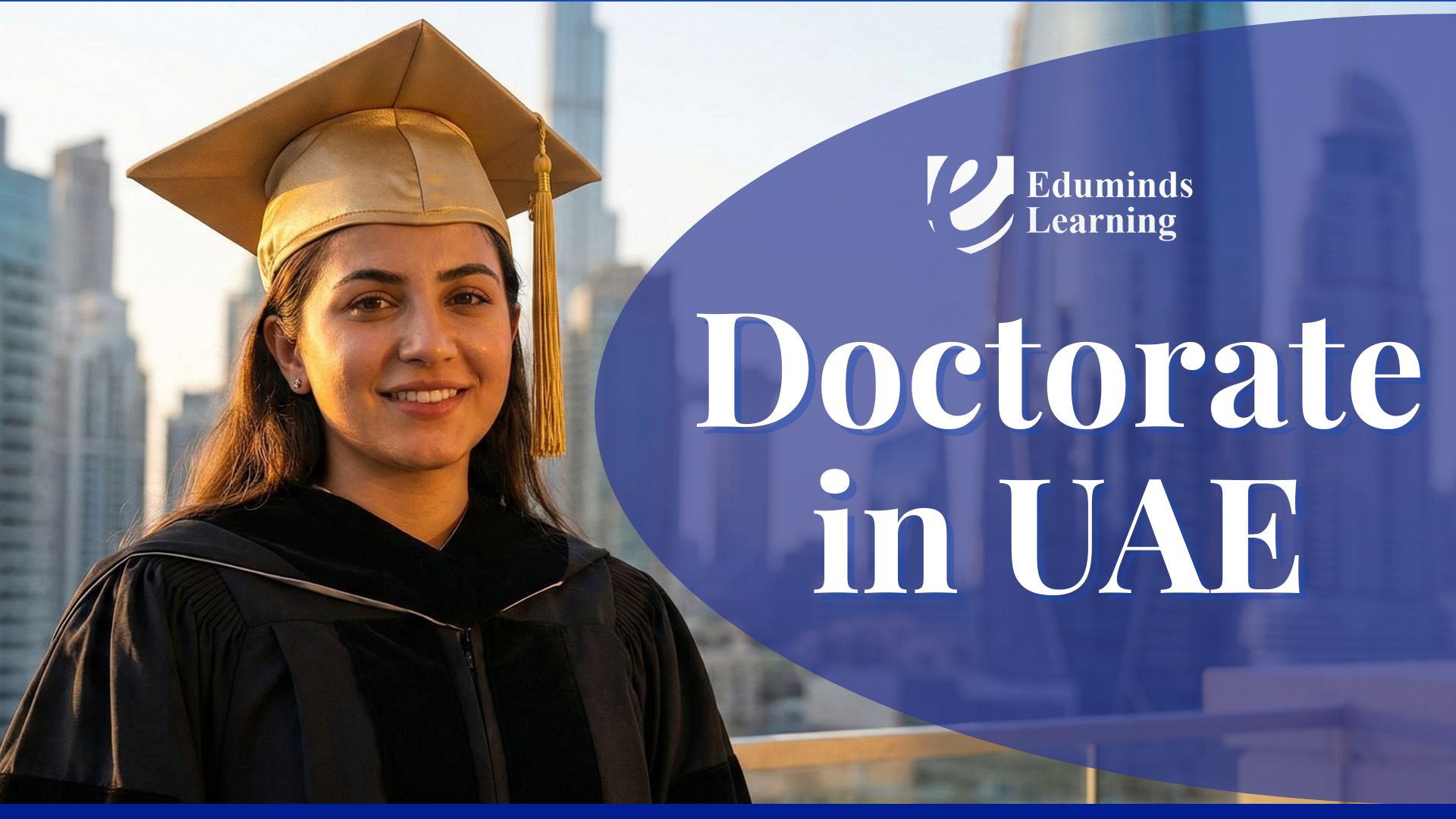
Over the past 20 years, the United Arab Emirates has stealthily evolved into a key intercultural hubs of education, business and cultural interaction in the world. European, North American, and Asian universities are now operating together with local institutions, and international academic conferences are regularly held in Dubai and Abu Dhabi.
\nAnd within this changing ecosystem there is a question being asked again and again--not least by senior professionals, entrepreneurs, policymakers, artists and social leaders:
\nIs it respected? Who is eligible? And what do they do in contrast to a traditional doctorate in UAE universities?
\nThis article provides the answers to those questions in a very eloquent, subtle, and practical way. Instead of hyperbole or empty promises, you have realistic explanations, examples, and sincere advice, written, among others, to the readers who prefer credibility over glory.
\nBy the end, you'll understand:
\n1.The functioning of the honorary doctorates in the UAE context.
\n2.Who is able--and who ought to be wary.
\n3.The way recognition is measured both locally and internationally.
\n4.What are the opportunities (and limitations) of an academic title of this sort?
\n\nIt will be useful to learn how the larger doctorate within the UAE ecosystem operates before we discuss honorary doctorates.
\nThe UAE hosts a mix of:
\noUniversities that are licensed by the federal government.
\noBranch campuses across the world.
\noInstitutes and academies of specialization.
\noHigher education providers that are privately run and which are governed by local regulators.
\noThe institutions in cities like Dubai and Abu Dhabi fall under knowledge and human development authority (KHDA) and UAE Ministry of Education.
\nA traditional doctorate awarded in a university in the UAE (PhD, DBA, EdD) involves:
\noEligibility: In order to be formally admitted, one should be at least twenty-one years old and he or she should have a college degree.
\noYoung years of study and research practice.
\noThesis defense and thesis submission.
\noSpecialization in academics or profession.
\nAnd an honorary doctorate, by and by:
\noNo coursework, no research.
\noGets honoris causa (to the honour of)
\noRewards outstanding effort as opposed to scholarly work.
\nThey both have prestige but to quite different ends.
\n\nAn honorary doctorate is a more symbolic academic award bestowed by an academic institution or university to recognize contribution, rather than enrolment.
\nMost commonly, it is granted to those who in the UAE context have:
\noExhibited excellent leadership.
\noProduced quantifiable social, economic or educational effect.
\noComplex innovation, foreign policy, culture or humanitarianism.
\noSymbolic values were in line with mission of the institution.
\nAmong the most common myths is that an honorary degree is a kind of a shortcut to a scholarly degree. It isn't.
\nYou cannot:
\noMake a living as a professor only because of an honorary doctorate.
\noMeet PhD eligibility requirements with it.
\noOffer it as a qualification in research.
\nThe thing you can do is that the academic title is a demonstration of distinction when it is applied openly and correctly.
\n\nEligibility is not a universal standard among institutions, although in general credible awarding bodies in the UAE evaluate a candidate on a number of dimensions.
\nRecipients are often:
\noFounders and CEOs that make a lasting impression.
\noSenior policy makers or diplomats.
\noFamous actors, authors or cultural celebrities.
\noReformers and institutional constructors in education.
\nIt is long-term contribution, and not just visibility, which matters.
\nThis is because in a region that prides itself to be a world center the effects will be felt across borders. Examples include:
\noTrans-national education programs.
\noHumanitarian programs on the international level.
\noRegional benefit industry innovation.
\noThe ability of thought leadership to drive a policy or practice.
\nThe UAE is becoming more cautious in terms of institutions. Before nominations are granted, background checks, peer reviews, as well as reputational reviews is the norm.
\nCongruence With Corporation Values.
\nHonorary doctorate means more of the institution than it does of the recipient. Alignment matters.
\n\nOne of the biggest convocation ceremonies was on 6 December 2025 at the Al Habtoor Grand Hotel and Resort, Dubai. It was a combination of formal academic tradition and global presence with high profile representation.
\nThe main characteristics of this convocation were: Place and Time:
\nThe event was held in the prestigious Al Andalus Ballroom in the Al Habtoor Grand Hotel, which has an excellent infrastructure to host different events and has the level of international standards.
\nOrganisers: This was jointly organised by Eduminds Learning and the Kennedy University System, which provided an avenue to academic and professional recognition.
\nInternational involvement: Alumni had various professional and geographic backgrounds, and the audience involved families, teachers and the senior professionals.
\nThose in authority: The event was marked by the attendance of high quality officials in the form of members of a royal family, top business executives and international dignitaries, a fact that highlighted the prestige of the ceremony.
\nProgramme Elements: The convocation entailed the procession during which the academic processions took place, speeches by the dignitaries, bestowal of masters and doctoral degrees, and the acknowledgment of professional accomplishments.
\nThis occasion was not merely a graduation event but an international convocation event with focus on education, leadership and international academic cooperation.
\n\nHonorary doctorates in professional life, as well as in the life of a citizen, are usually:
\noBeing issued by reputable institutions is respected.
\noRecognized as academic honorifics.
\noAppreciated in the leadership, advisory and ambassador roles.
\nThey are not looked upon as professional qualifications--but they are seriously considered when honestly put across.
\nInternational Recognition
\nInternationally, fame relies on:
\noThe legitimacy of the awarding institution.
\noThe clearness of the title that it portrays.
\noPurpose of use (ceremonial or academic)
\nA UAE honorary doctorate given by a well-managed institution may have a real impact--but not where it is misrepresented.
\n\nAlso It is in the use of academic title that most people come across and cause issues accidently.
\nBest Practices
\n1.Use such suffixes as H. D., D.H.L., or Doctor (Honoris Causa).
\n2.Disclose honorary in official bios.
\n3.Apply title in the ceremonial, speaking and advisory situations.
\nWhat to Avoid
\n1.Introducing it in the form of a research doctorate.
\n2.Claiming academic employment with its help.
\n3.Using the honorary designation is deliberately left out.
\n4.Credibility and reputation are guarded by transparency.
\n\nAn established education entrepreneur who has created international academic bridges is awarded an honorary doctorate at a convocation of the UAE. The recognition enhances:
\noCredibility of the policy advisor.
\noInstitutional partnerships
\noPublic trust
\nIt does not however override their professional qualification, but enhances it.
\nAn honorary doctorate is given in the UAE to a global humanitarian leader who works in the areas of refugee education and access to health. The title supports:
\noAdvocacy efforts
\noDiplomatic engagement
\noGlobal visibility
\nOnce again, it is recognition and not qualification.
\nOpportunities that an Honorary Doctorate in the UAE creates.
\nAn honorary doctorate can be used in an ethical way to open significant doors.
\nThought Leadership Platforms.
\nRecipients will be frequently invited to:
\nSpeak at academic forums
\nJoin advisory councils
\nMake a contribution towards policy or institutional strategy.
\nInstitutional Partnerships
\nCredibility in the title can be enhanced in:
\nInternational collaborations
\nEducation initiatives
\nNonprofit and social enterprise practice.
\nImpact Positioning and Legacy Positioning.
\nIn the case of senior professionals, it can be taken to indicate:
\nA milestone of recognition
\nLifetime contribution recognition.
\nA transition between academic influence and professional success.
\n\nHonorary doctorates are not all made.
\nWarning Signs
\na.Assured awards without assessment.
\nb.Organizations with low level of governance transparency.
\nc.None of the scholastic ceremonies or records.
\nd.The necessity to be aggressive in the title.
\nCredibility is a factor more than ever in the regulated environment of the UAE.
\nAsk these questions:
\noWhat are the most important aspects of campus life that set this school apart from the rest?
\noWhat are the career outcomes and average starting salaries for this program?
\noHow accessible are professors (office hours, mentorship)?
\noWhat are the accreditation of the university?
\n\nIf answers are vague, pause.
\n\n| Aspect | \nTraditional Doctorate | \nHonorary Doctorate | \n
|---|---|---|
| Coursework | \nCompulsory, not optional | \nNot required | \n
| Research | \nMandatory | \nNot required | \n
| Duration | \n3–6 years | \nSymbolic | \n
| Academic Rights | \nYes | \nNo | \n
| Purpose | \nCreation of knowledge | \nRecognition of impact | \n
They both are worthy, but why so very different reasons.
\nHonorary doctorates are becoming: as the UAE keeps establishing itself as an international education and leadership center.
\noMore structured
\noMore selective
\noMore impact-focused
\nThe institutions are beginning to realize that prestige is determined by credibility and not volume.
\nTo receivers, this implies that the honor will have an increasing burden--but increasing responsibility as well.
\n\nHonorary doctorate is not related to shortcuts or titles it is related to acknowledgement. Such recognition can only be meaningful in the context of authenticity in the mature and more-regulated education environment in the UAE.
\nThe honorary doctorate can be a potent symbol of contribution to leaders, innovators, and changemakers who receive it as a reward of impact and put it on with integrity.
\nSince the UAE continues to increase its global academic presence, the future of the country is where we realize that real prestige is not taken, it is given, honored, and carried in a responsible manner.
\n\nWhat is the value of an honorary doctorate in UAE? \n
An honorary doctorate in the UAE is an academic award that is given by a university or other academic institution to mark the special contributions made by somebody to the society, leadership, education, innovation, culture or other humanitarian interests. It is awarded as a sign of respect and recognition in contrast to a scientific study or an undertaking.
\nDoes the honorary doctorate match up with attaining a doctorate in the UAE? \n
No. The notion of honorary doctorate is just the contrary to the notion of earned doctorate in the UAE universities. The traditional doctoral degrees are based on formal education and research and academic investigation as compared to an honorary doctorate which is a nominal degree that does not require coursework, tests or dissertation.
\nWho tends to receive honorary doctorate in UAE? \n
The beneficiaries usually possess an exemplary past of enduring impact such as senior professionals, entrepreneurs, educators, policymakers, artists, scientists or humanitarian leaders. It is selected by donation, reputation, ethical position or adherence to the values of the institution that gives the award.
\nIs it possible to get an honorary doctorate in the UAE?\n
Under normal circumstances, no. Honorary doctorate is not conferred by application, but by nomination. Applicants are known by the academic councils, governing bodies or institutional partners and are then shortlisted by means of internal review and approval processes.
\n\nWhat does the awarding of honorary doctorates by UAE institutions entail?\n
It is usually done through nomination, evaluation of accomplishments and contribution to society, evaluation by academic or ethics bodies, and ultimately approved by a governing council or senate. This award is normally given out at the time of a formal convocation or special academy ceremony.
\n\nIs an honorary doctorate legally or academically valid?\n
An honorary doctorate is an honor that is academically valid, but not a professional or academic qualification. It does not have the same academic equivalent of a research doctorate and must not be marketed as one in the field of professional or academic life.
\n\nIs it possible to use the title, Doctor, after getting an honorary doctorate?\n
The title can be applied in ceremonial settings, public settings or recognition based settings though with proper clarification. To avoid misunderstanding, it is best practice to state that the academic title is honorary, e.g. Doctor (Honoris Causa) or H.D. to ensure transparency and credibility.
\n\nIs an honorary doctorate permitting teaching or academic supervision?\n
No. Academic rights (e.g. the ability to teach at a university, supervise doctoral students, faculty positions) are not provided under an honorary doctorate. Such positions need acquired educational degrees and licensing.
\n\nWhat is the perception of an honorary doctorate in the UAE?\n
In other countries, an honorary doctorate is typically held in high regard in cases where it is granted by a reputable institution and utilized in an open manner. Its acceptance relies on the goodwill of the awarding body and the transparency of the fact of the honorary nature of the title.
\n\nWhat is the professional worth of an honorary doctorate?\n
An honorary doctorate, when granted ethically and reasonably, can improve the credibility of the masses, leadership positioning, institutional partnering, and lifetime achievement recognition. It gives it symbolic importance and not professional authority.
\n\nIs it possible to revoke an honorary doctorate?\n
In some institutions, the institution reserves the right to revoke an honorary degree of doctorate in case the later activities of the recipient are not in line with ethical principles or the values of the institution. This supports the significance of integrity that goes together with the honor.
\n\nOn which page of a CV or a biography should an honorary doctorate be mentioned?\n
Honorary doctorsate must be included under honorary and awards and not under the academic qualification. Honorary is to be mentioned all the time to prevent misunderstanding.
\n\nDoes an honorary doctorate make one eligible in UAE residency or Golden Visa programs?\n
No. the UAE residency or Golden Visa programs, which include the doctoral level, usually require the use of earned degrees that are both academically validated and officially certified. Honorary doctorates fail to qualify these criteria.
\n\nIs an honorary doctorate admissible to any further academic admission?\n
No. Honorary doctorate is not a qualification that satisfies any eligibility criteria to get into the doctoral or postgraduate academic program since it does not apply to any academic research or study training.
\n\nThe question is how it is possible to measure the credibility of an offer of an honorary doctorate?\n
Prior to accepting an honorary doctorate, one should ensure that the institution was founded lawfully and has a proper system of governance, and is academically regulated, the way the institution was selected should also be transparent besides the credentials of those who have received it. Honorary awards are not guaranteed and commercialized in reputable institutions.
\n\nLoading comments…
Our experts will contact you within 24 hours











Subscribe Now — Don't Miss Our Future Updates!
![[object Object]](/_next/static/media/white-logo.e43d74a5.svg)
Your Dreams - Our Mission
![[object Object]](/_next/static/media/star.e839977c.svg)
![[object Object]](/_next/static/media/clutchco.d9d205d7.svg)
![[object Object]](/_next/static/media/google.e753ca54.svg)
![[object Object]](/_next/static/media/facebook.8a231495.svg)
![[object Object]](/_next/static/media/trustpilot.77877b99.svg)


Eduminds Learning
LLC
30N Gould ST STE R, Sheridan
WY 82801, United States
+1 (307) 295-0570
Eduminds Learning Private Limited
D-26, Block D, Sector 59, Noida Uttar Pradesh - 201301 India.
+91 6387739671, +91 9289919899
Eduminds Learning Limited
Unit 2A, 17F, Glenealy Tower No 1, Glenealy Central Hong Kong.
+44 2045922871

Eduminds Learning
LLP
128 City Road, London, EC1V 2NX,
United Kingdom
+44 7520 694 197
Copyright © 2026 Eduminds Learning. All Rights Reserved.

