Program Catalog
- Popular Programs

- Management Programs

- Honorary Programs

- Post-Doctorate Programs

- Our Partner Universities

How to Get Professorship Online Step-by-Step Guide
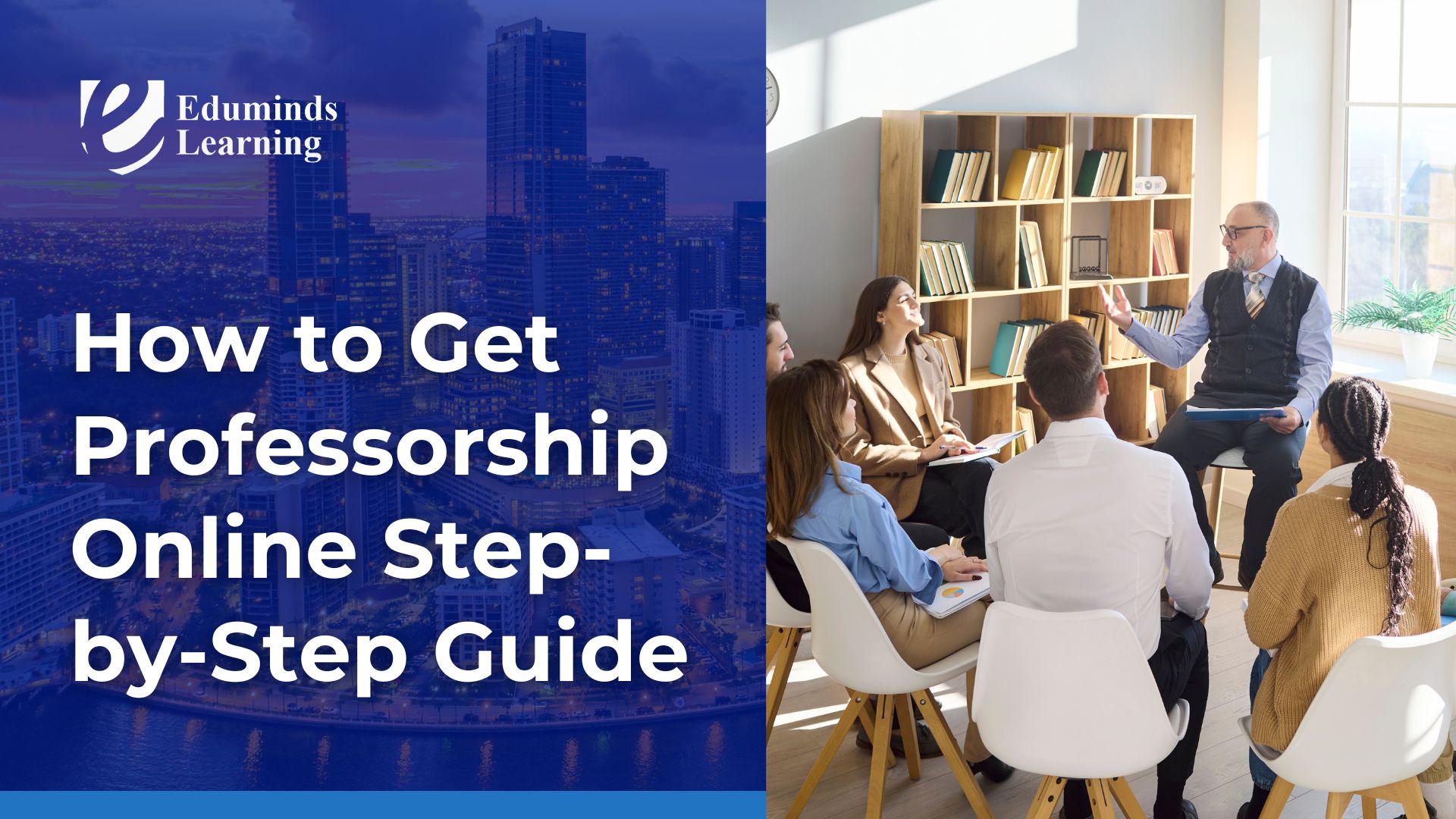
Years spent walking campus halls used to define the path to being a professor. Now? That picture looks nothing like before. Digital classrooms stretch across continents, pulling old boundaries apart. Big names in higher education operate beyond physical walls these days. Teaching at that level online can happen - just not by accident. Standing out means showing real knowledge, backed by proper credentials. Success hides behind smart choices more than luck.
\r\nThis guide breaks down what it truly takes to land a professor role online, following today’s university hiring patterns where digital teaching comes first. Not theory - just how things work now. Hiring committees look at remote experience differently. They value consistent online course delivery more than traditional metrics. Your digital footprint matters - not social media - but learning platform activity. Remote collaboration often counts more than solo research. Many schools require proof of virtual classroom success before even reviewing your degree. Teaching demos are recorded, not live. Letters of recommendation carry less weight if the referee has no online background. Promotion depends heavily on student engagement data. Peer reviews still matter, but they’re conducted through shared documents and video feedback loops. Tenure decisions increasingly include analytics from LMS platforms. Few talk about this shift - it just happened.
\r\n\r\n\r\nHold on. What is a Professorship Program? That needs sorting out first.\r\n Teaching online takes time, no instant credentials here. This job happens through screens, yet demands real effort. Educators show up in virtual classrooms, guiding learners without physical walls around them Nowadays some colleges give step-by-step online routes to become a professor, or mix traditional training with digital tools so people can get ready for teaching in virtual classrooms. Here's what stands out: research, teaching, academic work - still required, just moved online now that everything runs through screens. Should becoming an online teacher matter to you, getting clear on what schools expect is step one. Be it digital campuses or brick-and-mortar ones, high academic bars never drop. Minimum Qualifications\r\n Additional Expectations\r\n Practical example:\r\n A handful of international organizations looking for remote teachers care mostly about applicants whose work shows up in scholarly indexes - either through journal articles or presentations at conferences. What matters to them? A track record that's already visible in research collections online. Some prefer those who’ve shared findings where academics actually look, not just anywhere. Seen in databases - that’s the pattern they follow. Papers out there, officially listed, make a difference. Not every detail counts, but indexed output does. A clear path exists for becoming an online university instructor. Step one usually involves earning a doctoral degree. Following that, gaining teaching experience matters greatly. Some enter the field after publishing research. Others build expertise through industry work. A strong background in the subject helps. Then comes searching for openings at digital learning platforms. Applications often require a CV and sample lectures. After submitting materials, waiting begins. Interviews might include demo lessons. Success means starting to teach remotely. Each stage takes time, effort, persistence. What you study shapes where your job path leads. Concentrate on areas people search for often online Funny thing? Fields that mix subjects - like artificial intelligence used in medicine - are gaining more weight in internet-based learning spaces. This step has no shortcuts. Folks deep into their careers often start doctorates online, fitting study around jobs. A shift like that? It reshapes what comes next without quitting work.\r\n\r\n\r\n Most future professors stumble right here. To build credibility: Why it matters:\r\n Picking who gets hired often comes down to published work, more than diplomas alone. What matters most shows up in journals, not framed certificates on a wall. Gain teaching experience including online\r\n Start small if needed: This shapes your path toward teaching at universities through digital platforms, like:\r\n Besides being optional now and then, it brings a clear edge. An online teaching certification for professors demonstrates:\r\n These days, a number of colleges ask new instructors to finish in-house courses on digital classroom methods prior to starting work. Your digital trail counts now like never before. Still, few notice how much it shapes their path forward. Create: Starting here can boost how far your academic work reaches across international schools. A wider audience begins to notice when you show up consistently online. Few schools match up the same way. Target: Roles to consider: Watch out for schools that hand out titles like souvenirs. Some call you a professor just because you paid, not learned. These shortcuts skip real study. Credentials earned too fast often mean little. Think twice before joining programs with no depth. Real knowledge takes time, effort shows. Nowadays, many experts move from their fields into classrooms. Some trade labs for lecture halls, others shift from practice to guiding students. Where careers once stayed narrow, they now branch toward education. Often, real-world specialists begin sharing knowledge in schools. Example scenario:\r\n A corporate professional with 10+ years of experience in business management: A growing number of people follow this route, particularly within tech or companies. Still, it shows up more often now than before. What really matters isn’t just diplomas. Getting ahead as an online professor leans heavily on certain skills. These abilities shape how well someone does. Not every qualification shows up on paper. Some strengths grow through experience. Others come from practice over time. The path shifts depending on what you can actually do. Credentials open doors, yet performance keeps them open. Real capability often speaks louder than titles ever could 1. Digital Communication Mastery\r\n Clear explanations matter most when you cannot show things in person. 2. Student Engagement Techniques\r\n Online classes require: 3. Research Continuity\r\n Pacing matters more than a finish line ever could. Each release nudges the path forward. 4. Managing Time and Flexibility\r\n Online professors often teach across time zones. A route like this holds potential - just do not expect it to be smooth. 1. High Competition\r\n Global talent pool means you're competing internationally. 2. Credibility Concerns\r\n Picking the wrong program might waste your time - look into its reputation first. 3. Workload Balance\r\n Handling classes along with studies and office tasks takes effort. \r\n \r\n The demand for online professors is accelerating due to: These days, more colleges hire professors who split their time between online classes and teaming up on studies from different places. Key takeaway: What once seemed unusual now feels ordinary. Online teaching isn’t just popular - it’s expected. A shift has happened quietly, without fanfare. This way of working sticks around because it fits. Not temporary, but built to last. \r\n \r\n Finding a professorship online? Start here. Pay attention to what follows. One thing matters most - your next move shapes everything after it. This path needs steady effort, day by day. Look closely at each step before moving forward. Success hides in details others skip too fast. Stay sharp. Every choice pulls you closer - or not \r\n \r\n Fine, yet it demands consistency plus genuine intent. Still, without real effort, it falls apart fast. Truth sits in details, not diplomas. Earning trust online takes doing real work, not chasing labels. What mattered in old lecture halls matters now: sharp thinking, solid proof, clear teaching. Standards didn’t vanish - they shifted screens. Opportunity sets them apart. Right now, location doesn’t hold you back. If you’ve got the credentials and a clear plan, classrooms stretch across time zones. Working with people worldwide becomes normal. A strong reputation in education? That grows online, piece by piece. Distance fades when your presence lives on screens.\r\n
\r\nThe Reality Check Requirements for Online Professor\r\n
\r\n
\r\n\r\n
\r\nHow To Be An Online University Professor\r\n
Select an academic focus\r\n
\r\n
\r\nEarn Required Academic Qualifications\r\n
\r\n
\r\nPublish your thesis and research\r\n
\r\n
\r\n\r\n
\r\n\r\n
\r\n\r\n\r\nGet Certified to Teach Online as a Professor\r\n
\r\n
\r\nBuild Your Academic Digital Presence\r\n
\r\n
\r\nSelect Online Universities with Purpose\r\n
\r\n
\r\n\r\n
\r\nFrom Industry to Teaching Online\r\n
\r\n
\r\nSkills That Make an Online Professor Successful\r\n
\r\n
\r\nThings to Watch For
\r\nThe Future Of Online Teaching\r\n
\r\n
\r\nActionable Takeaways\r\n
\r\n
\r\nFinal Thoughts on Whether Online Teaching Jobs Are Worth Pursuing?\r\n
Loading comments…
Our experts will contact you within 24 hours






Subscribe Now — Don't Miss Our Future Updates!
![[object Object]](/_next/static/media/white-logo.e43d74a5.svg)
Your Dreams - Our Mission
![[object Object]](/_next/static/media/star.e839977c.svg)
![[object Object]](/_next/static/media/clutchco.d9d205d7.svg)
![[object Object]](/_next/static/media/google.e753ca54.svg)
![[object Object]](/_next/static/media/facebook.8a231495.svg)
![[object Object]](/_next/static/media/trustpilot.77877b99.svg)


Eduminds Learning
LLC
30N Gould ST STE R, Sheridan
WY 82801, United States
+1 (307) 295-0570

Eduminds Learning Private Limited
D-26, Block D, Sector 59, Noida Uttar Pradesh - 201301 India.
+91 6387739671, +91 9289919899

Eduminds Learning Limited
Unit 2A, 17F, Glenealy Tower No 1, Glenealy Central Hong Kong.
+44 2045922871

Eduminds Learning
LLP
128 City Road, London, EC1V 2NX,
United Kingdom
+44 7520 694 197
Copyright © 2026 Eduminds Learning. All Rights Reserved.

